
By industry
Power BI for manufacturing
Mid-market plants usually already have dashboards. What they lack is one model a supervisor can open at the start of the shift and a controller can defend at the close.
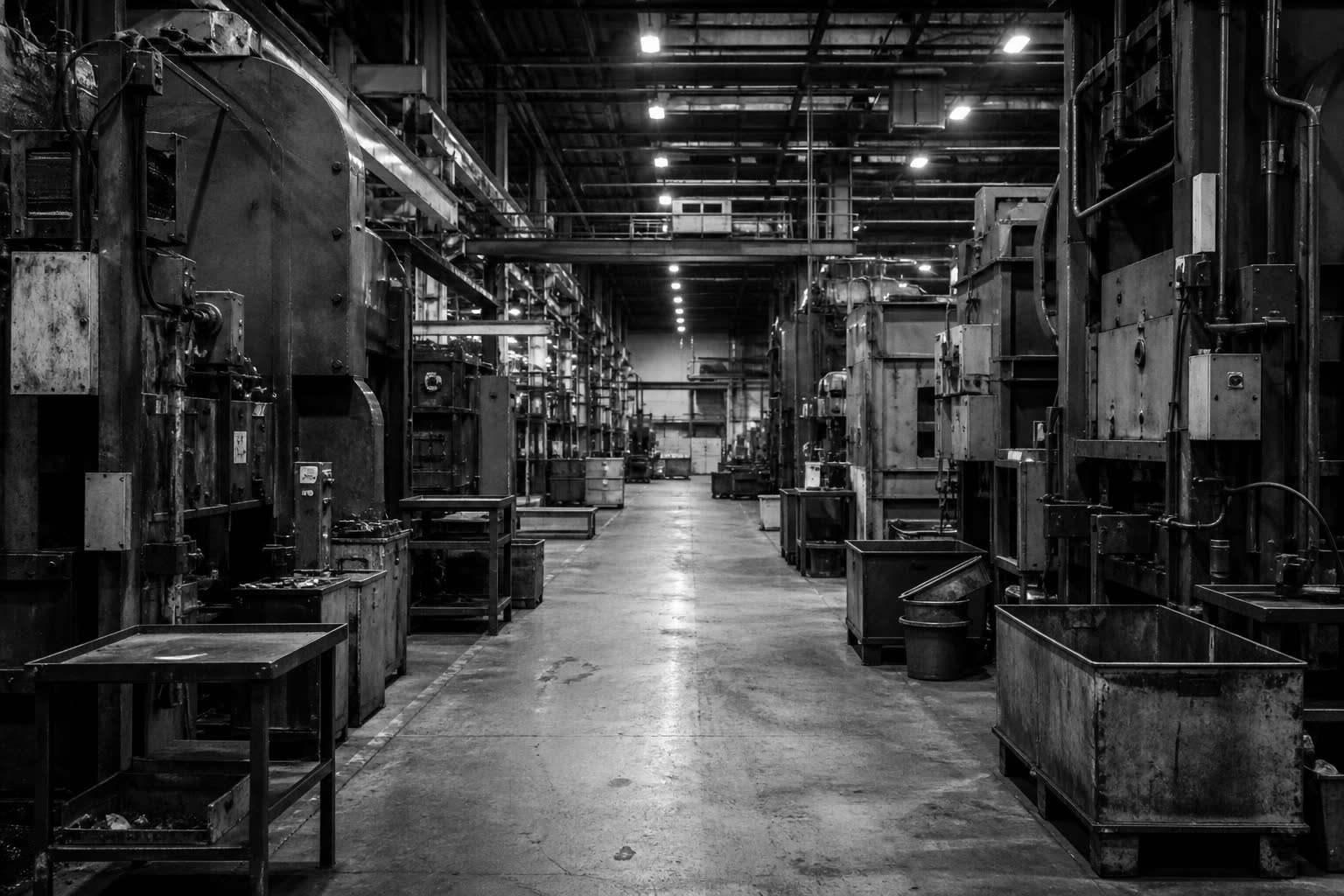
When the plant and finance stop sharing a number
Mid-market manufacturers rarely lack dashboards. They lack one model that ops can open at 6:30 a.m. and finance can defend in the close. Supervisors rebuild shift grain in Excel. Scrap never makes the Monday pack. The weekly ops review becomes a slide deck. Slow refresh costs downtime while quality issues keep running.
The work starts from the decisions the plant already runs. Shop-floor measures and the profit and loss live in one semantic model, so operations and finance are not keeping two sets of books.
- Shop-floor vs finance on shared measures—not two workbooks that never tie.
- OEE, throughput, scrap, and quality are available at line and shift, not only as a plant total.
- ERP-aware modeling (SAP, Infor, Dynamics, Epicor, and similar) without a six-month “BI transformation.”
- Adoption in the huddle: pages people open, not posters about self-service.
What we do for manufacturing teams
Plant grain that matches the huddle
Shift, line, cell, and crew as first-class dimensions—so supervisors stop rebuilding the morning meeting in spreadsheets. See why ops still runs the plant from spreadsheets.
Scrap and quality in the pack
Yield, scrap, and escapes in the same Monday pack as throughput—not a plant-only report nobody brings upstairs. Read manufacturing scrap that never makes the pack.
Speed when downtime costs money
Tuned models and visuals so defect and downtime signals arrive before another shift of scrap. Background: slow BI costs manufacturing downtime.
Shared measures with finance
One semantic model for production and P&L definitions. Ops and controllers argue less about which number is “real.”
ERP-aware delivery
We use practical extract and model patterns for the systems you already run. We do not ask you to stand up a new warehouse before the first report is useful.
Huddles over slide decks
Live pages for the weekly ops review instead of screenshots that are stale by the meeting. Related: when the weekly ops review is a slide deck.
Start with one plant report
The Power BI Quickstart rebuilds one manufacturing report in two weeks. That is often weekly production, inventory visibility, on-time delivery, or a scrap summary. Discovery, the automated report, training, and one week of support are included.
See Power BI Quickstart Book a Session
Tools that support the floor
The free Alluvium OEE Gauge (live on Microsoft AppSource) shows Availability × Performance × Quality with target bands for plant-floor status at a glance. When the model itself is the risk, the optional Power BI model health score reviews relationships, DAX, Power Query, and RLS.
Still comparing partners? Use the manufacturing checklist: How to choose a Power BI partner for manufacturing.
Manufacturing Power BI FAQs
Do you build separate plant and finance models?
No. We design one semantic model with shared definitions so throughput, scrap, and P&L stop living as two sets of books.
Can this work with our ERP?
Yes. We are ERP-aware—SAP, Infor, Dynamics, Epicor, and similar systems—with practical extract and model patterns, not a greenfield data warehouse pitch.
Where does the OEE Gauge fit?
The free Alluvium OEE Gauge on AppSource helps operators see Availability × Performance × Quality at a glance. The consulting work is the trusted measures and grain behind it.
What does a Quickstart cover for a plant?
It is one report, such as weekly production, a scrap pack, on-time delivery, or inventory visibility, rebuilt in two weeks, with training and one week of support. The fee is stated on the Quickstart page.
Next step
Put the plant and finance on one model
Book a Session and name the report that slows the huddle or the close. Or start with a Quickstart if you can already point at that one report.